
How to Choose a Japanese Teapot (Kyusu)
A kyusu is the small Japanese teapot used for green tea. It looks simple, but each part of it is shaped by the way Japanese tea is brewed: small amounts of leaf, short steeps, cooler water and a pour that empties the pot every time. This guide explains what to look at when you choose one: size, handle, filter and clay, and how to brew and care for it once it is home.
What is a kyusu?
Kyusu (急須) is the general Japanese word for a teapot. The most common shape has a hollow handle set at a right angle to the spout, called yokode (side handle). There are also ushirode pots with a handle at the back, like a Western teapot, and uwade pots with a handle over the top. All the teapots in our kyusu collection are side-handled.
Why the side handle? You hold the handle with one hand and keep a finger on the lid, then roll your wrist to pour. The pot tips all the way over in one smooth movement, which matters because Japanese green tea is poured out to the last drop.
Choosing the size
Japanese teapots are smaller than most Western ones because green tea is served in small cups and brewed several times from the same leaves.
- Around 280 ml: one or two people, or small, concentrated brews of high grade sencha and gyokuro.
- Around 350 to 360 ml: the most versatile size, enough for two or three small cups.
- Around 430 ml: for sharing with one or two others, or for filling a larger mug.
If you are not sure, choose a medium pot. It is easier to brew a little tea in a medium pot than a lot of tea in a small one.
The filter
A kyusu has its filter built in, so you do not need a separate strainer or tea bag. Loose leaves move freely in the body of the pot and the filter holds them back as you pour. The main types are:
- Ceramic filter (sasame): small holes cut into the clay wall behind the spout. Traditional, but fine leaf can clog it.
- Flat stainless mesh: a fine metal mesh fixed inside the pot in front of the spout. Easy to rinse and good with small sencha leaves.
- Fine mesh filters such as the Sawayaka mesh: a very fine, precisely woven mesh that keeps even small leaf particles out of the cup while letting the tea flow easily.
Every pot in our collection has a built-in mesh filter.
Clay and glaze
Many of the best known kyusu come from Tokoname in Aichi Prefecture, a pottery town with a long tradition of teapot making. Unglazed clay feels warm and slightly matte in the hand, and with daily use the surface develops a soft sheen. Because unglazed clay is slightly porous, some tea drinkers keep one pot for green tea and another for roasted teas such as hojicha.
A glazed pot is fully sealed on the glazed surface. It is a good choice if you like to change teas often, and glazes such as midoriyu (green glaze), namakoyu (a deep, variegated blue glaze) or kurofuki (smoky black) give each pot its own character. Tobikanna is not a glaze but a carved pattern: rows of small marks made by a vibrating tool as the pot turns on the wheel.
How to brew sencha in a kyusu
- Warm the pot and cups with hot water, then pour it away.
- Add about 4 to 6 g of sencha (roughly two teaspoons) for two small cups.
- Pour in about 150 to 200 ml of water at 70 to 80°C. If you only have boiling water, pour it into the cups first and then into the pot; each transfer cools it down.
- Wait about 60 seconds without stirring.
- Pour a little into each cup in turn, going back and forth, so every cup has the same strength. Empty the pot completely.
- Brew again with the same leaves. The second infusion needs only 10 to 20 seconds, and the third a little longer.
Other teas need different temperatures: gyokuro is brewed cooler (around 50 to 60°C) and for longer, while hojicha and genmaicha are brewed with very hot water and a short steep. You can find our loose-leaf teas in the Japanese green tea collection, and a broader introduction in What Is Japanese Tea?
Caring for your kyusu
- Empty the leaves after each use and rinse the pot with warm water.
- Wash by hand. With unglazed clay, avoid detergent if you can, as the clay can take on its scent.
- Let the pot dry completely with the lid off before putting it away.
- Avoid sudden changes in temperature, such as pouring boiling water into a cold pot or putting a hot pot into cold water.
- To clear a mesh filter, rinse it from the inside with running water or use a soft brush.
Our Japanese teapots
All five teapots in our collection are side-handled kyusu made in Japan:
- 280 ml Kurofuki: smoky black glaze, fine mesh filter, for one or two people.
- 350 ml Namakoyu: blue gradient finish, flat stainless mesh filter.
- 360 ml Midoriyu: soft green glaze, Sawayaka fine mesh filter.
- 360 ml Tobikanna: carved chatter-mark pattern, stainless steel filter.
- 430 ml Black Finish: unglazed Tokoname-style clay from Aichi, black to brown gradation, flat stainless mesh filter.
Pair your pot with a set of Japanese tea cups, or browse the full kyusu collection.
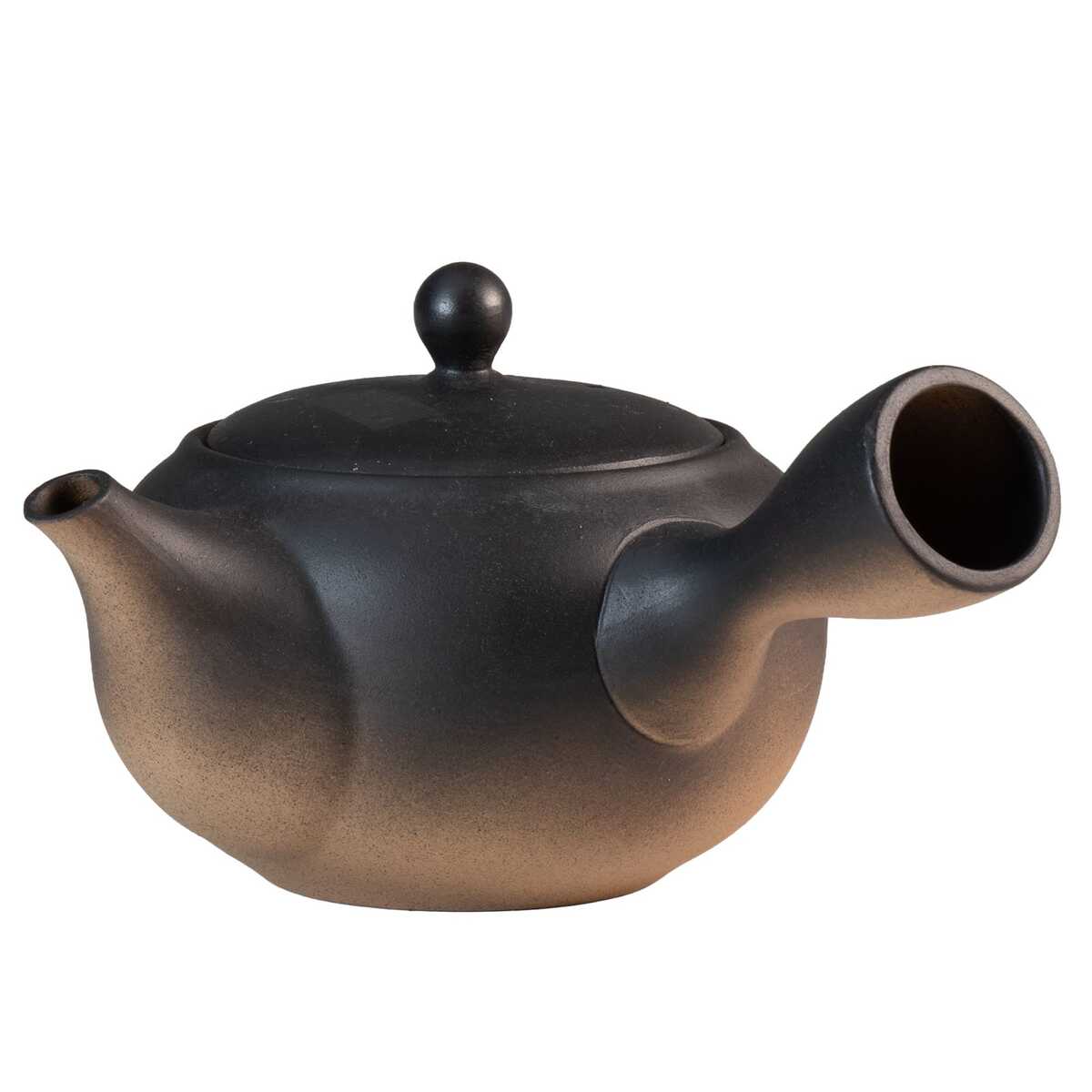
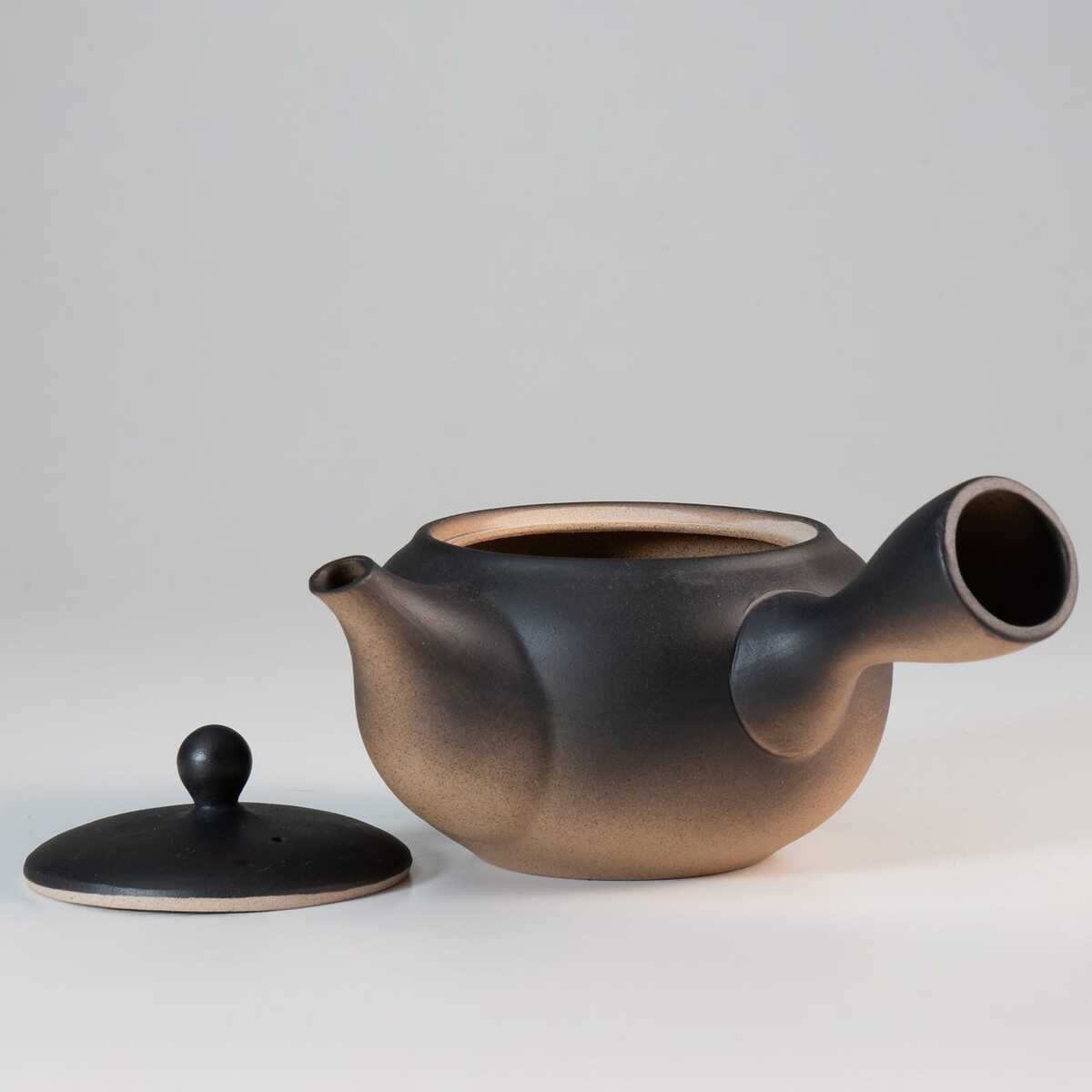
Asayu Traditional Japanese Kyusu Teapot 430ml - Black Finish
Asayu Traditional Japanese Kyusu Teapot 430ml - Black Finish
$39.99 USD


Asayu Traditional Japanese Kyusu Teapot 360ml Midoriyu
Asayu Traditional Japanese Kyusu Teapot 360ml Midoriyu
$49.99 USD


Asayu Traditional Japanese Kyusu Teapot 350ml Namakoyu
Asayu Traditional Japanese Kyusu Teapot 350ml Namakoyu
$49.99 USD
Our Newsletter
Asayu Traditional Japanese Kyusu Teapot 430ml - Black Finish
Asayu Traditional Japanese Kyusu Teapot 430ml - Black Finish
$39.99 USD
Asayu Traditional Japanese Kyusu Teapot 360ml Midoriyu
Asayu Traditional Japanese Kyusu Teapot 360ml Midoriyu
$49.99 USD
Asayu Traditional Japanese Kyusu Teapot 350ml Namakoyu
Asayu Traditional Japanese Kyusu Teapot 350ml Namakoyu
$49.99 USD


Asayu Traditional Japanese Kyusu Teapot 360ml Tobikanna
Asayu Traditional Japanese Kyusu Teapot 360ml Tobikanna
$49.99 USD

0 comments