
Incense Holders

Every holder here is made by hand in Japan, most of them Mino ware from Gifu, where potters have worked the same clay for more than 1,300 years. Four series sit side by side: Heritage for unglazed, temple-like surfaces, Lotus for the soft shapes found in modern Japanese homes, Small for a desk or a windowsill, and Plate for anyone who burns incense daily and wants the ash contained.
Each one is sized for Japanese incense, which is thinner than Indian sticks because it has no bamboo core.
Choose by the shape of incense you burn, then by the style of the room it will sit in.
Filters
41 items
Sort Featured
-
Zen Black and Gold Incense Holder -
Traditional Incense Bowl with Brass Incense Burner - Orange Traditional Incense Bowl with Brass Incense Burner - Orange
-
Navy Dark Blue Lotus Ceramic Incense Holder -
White Lotus Incense Holder -
Dark Green Lotus Incense Holder -
Small Nature Aquamarine Incense Holder -
Small Nature Ocean Blue Incense Holder -
Small Traditional Japan Incense Holder -
Small Zen Incense Holder -
Small White Pearl Incense Holder -
Traditional Ceramic Incense Holder Plate and Brass Incense Burner Set - White Traditional Ceramic Incense Holder Plate and Brass Incense Burner Set - White
-
Traditional Ceramic Incense Holder Plate and Brass Incense Burner Set - Blue Traditional Ceramic Incense Holder Plate and Brass Incense Burner Set - Blue
-
Traditional Ceramic Incense Holder Plate and Brass Incense Burner Set - Brown Traditional Ceramic Incense Holder Plate and Brass Incense Burner Set - Brown
-
Traditional Ceramic Incense Holder Plate and Brass Incense Burner Set - Orange Traditional Ceramic Incense Holder Plate and Brass Incense Burner Set - Orange
-
Traditional Ceramic Incense Holder Plate and Brass Incense Burner Set - Green Traditional Ceramic Incense Holder Plate and Brass Incense Burner Set - Green
-
Pastel Green Lotus Incense Holder -
Pastel Pink Lotus Incense Holder -
Incense Bowl & Grey Ash Incense 50g -
Grey Incense Ash (150 g) -
Low Smoke Incense Gift Set [ Sakura Cherry Blossom Incense Sticks+ White Lotus Incense Holder ] Low Smoke Incense Gift Set [ Sakura Cherry Blossom Incense Sticks+ White Lotus Incense Holder ]
-
Low Smoke Incense Gift Set: Sandalwood Incense Sticks with Navy Blue Lotus Incense Holder Low Smoke Incense Gift Set: Sandalwood Incense Sticks with Navy Blue Lotus Incense Holder
-
Low Smoke Incense Gift Set Japan: Sakura & Green Tea with White Lotus Incense Holder Low Smoke Incense Gift Set Japan: Sakura & Green Tea with White Lotus Incense Holder
-
Low Smoke Incense Gift Set Yoga; Lotus & Sandalwood Incense with Navy Blue Lotus Incense Holder Low Smoke Incense Gift Set Yoga; Lotus & Sandalwood Incense with Navy Blue Lotus Incense Holder
-
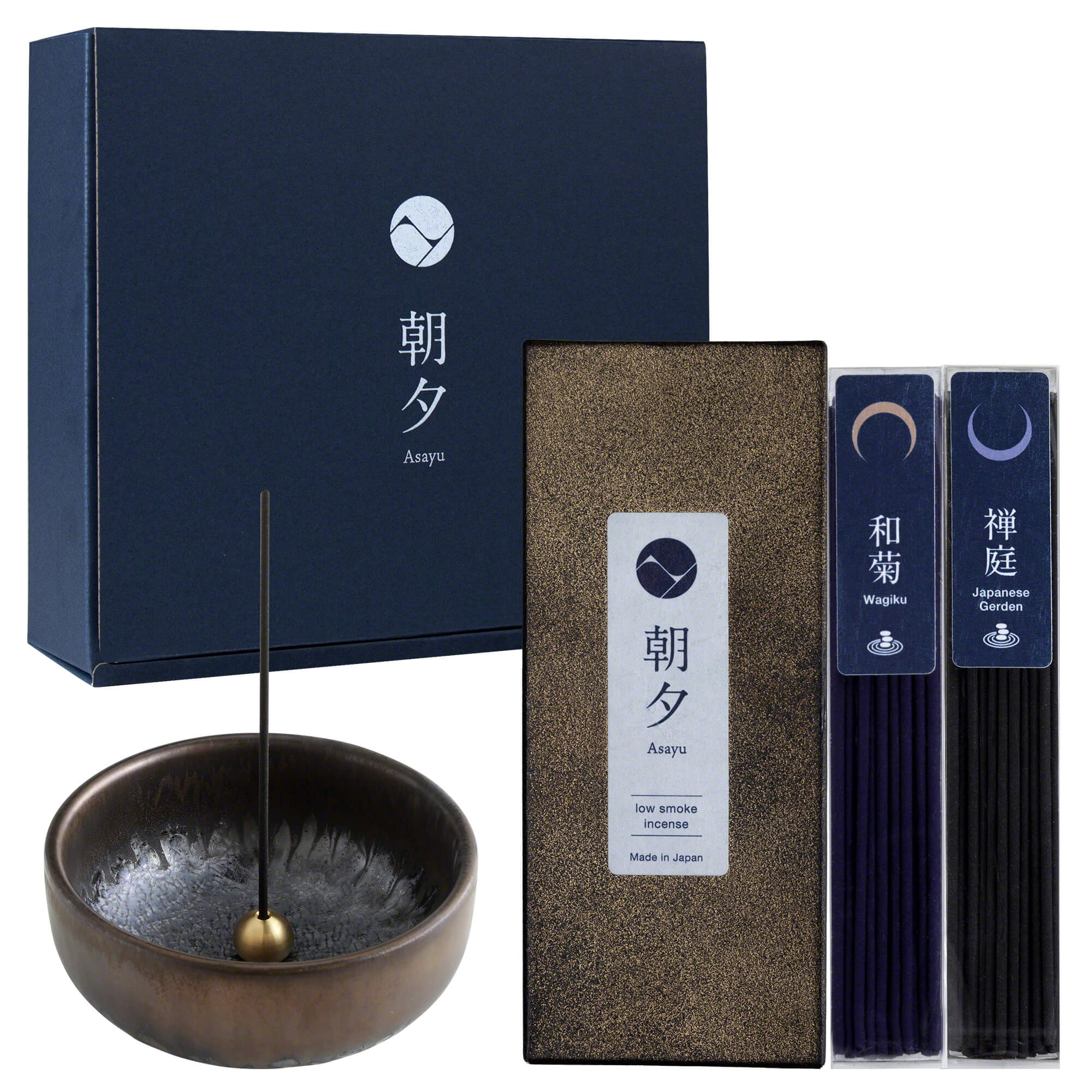
Low Smoke Incense Gift Set with Japanese Incense Zen Set and Zen Incense Holder Low Smoke Incense Gift Set with Japanese Incense Zen Set and Zen Incense Holder


Frequently asked questions
Will my incense sticks fit?
If they are Japanese incense, yes. Japanese sticks have no bamboo core and are usually around 2.7 mm thick. Indian or Tibetan incense is wrapped around a bamboo core and is thicker, so it may not sit properly in a holder sized for Japanese sticks.
Which holder catches the most ash?
The Plate series. A flat dish sits under the whole length of the stick rather than under one end of it, so nothing falls past the edge.
Do I need incense ash?
Only for bowl-style burners, where the stick or cone is set into a bed of ash. Stick holders do not need it.
How do I clean an incense holder?
Let it cool completely, then wipe with a dry cloth. Glazed ceramic can be washed with warm water. Avoid soap, which can hold on to the scent. Unglazed Heritage pieces should be wiped dry only.
Can I use these for cone incense?
The wider dishes and bowls work for cones. Narrow stick holders do not, as a cone needs a flat heatproof surface beneath it.
Is it safe on a wooden surface?
Choose a holder with a tray or plate rather than a bare stand, and bear in mind that ceramic gets warm. Use a mat under it on a delicate finish, and never leave burning incense unattended.